Florida Certified Roofing Contractor · CCC1329157 · Orlando and Fruitland Park
Attic Insulation and Ventilation
in Orlando, FL
On a Florida summer afternoon the attic over your ceiling bakes, and your AC pays for it. The right insulation and a balanced roof ventilation system keep that heat where it belongs, and help your shingles last.
We check your attic and your roof vents together, because they work as one system.
Call 407-851-0680Open 24 hours
- R49ENERGY STAR’s target for an empty Central Florida attic
- Solar or electricAttic fans, sized for your roof
- 4.9 stars on Google564 of your neighbors rated their roof
- Since 1975Five decades on Central Florida roofs
How an Attic Upgrade Works
Insulation and ventilation work together, so we look at both before we recommend either.
-
Attic and roof check
We measure the insulation you have, look for gaps, leaks and moisture, and check the vents at the soffits and along the ridge.
-
A written plan and price
What to add, what to fix and what it costs, all in writing, with no pressure to decide on the spot.
-
Clean installation
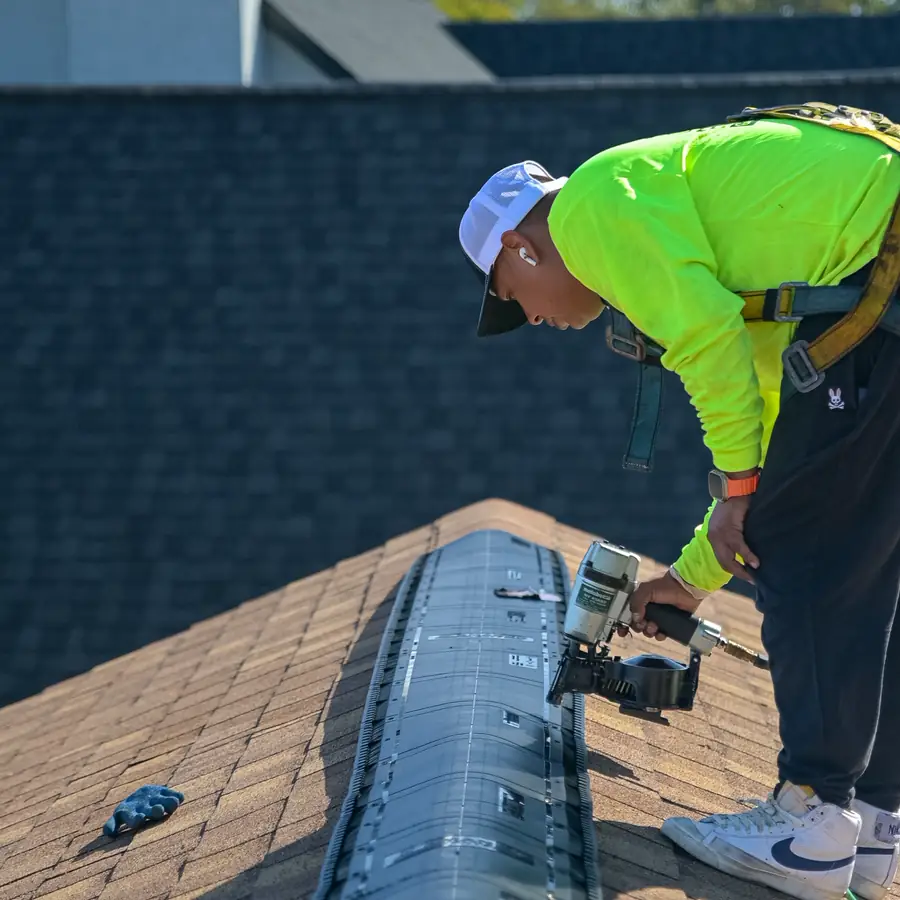
Baffles at the eaves to keep the vents open, insulation installed to an even depth, and new vents or fans sealed into the roof.
-
Photos when we’re done
You see the depth we added and the vents we installed, without climbing into the attic.
Why Your Attic Matters in Florida
On a sunny summer afternoon a dark roof can pass 150 degrees, and that heat works its way down through the attic to your ceiling.
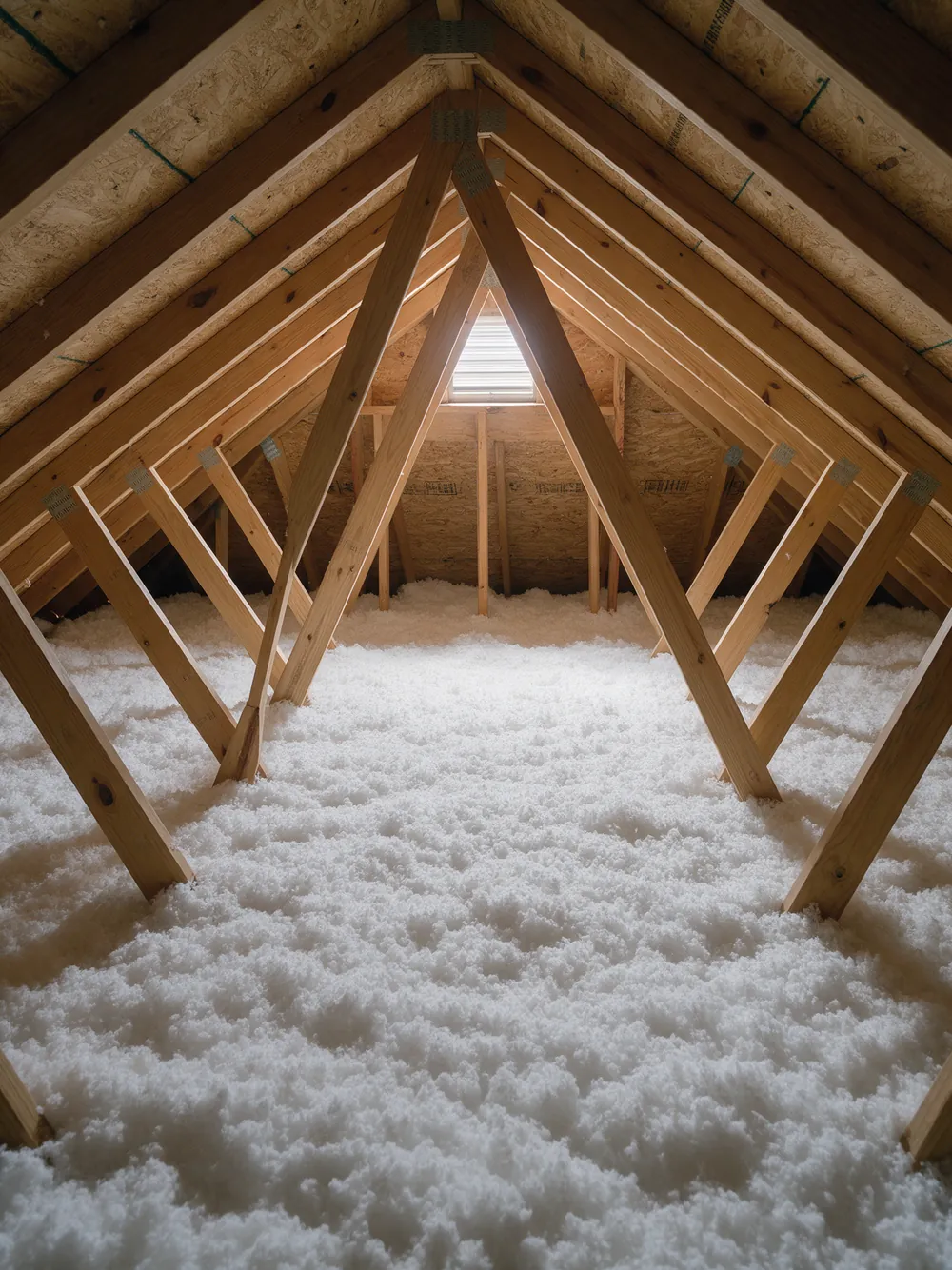
Insulation slows the heat. Central Florida is climate zone 2. ENERGY STAR recommends R49 for an attic with no insulation, or adding R38 over three to four inches of what’s there.
Ventilation moves it out. Air should come in low at the soffits and leave high at the ridge, and Florida’s code sets how much vent area your attic needs.
Air sealing keeps the cool in. Gaps around ceiling lights, the attic hatch and duct openings let cooled air escape into the attic. Sealing them comes before new insulation.
A radiant barrier helps in the right place. Under the roof deck, facing an air space, it can trim cooling costs in a hot, sunny climate. It doesn’t belong on top of insulation.
There’s no federal tax credit for insulation installed in 2026, but OUC and Duke Energy offer rebates for ceiling insulation upgrades. Check your utility’s rules before the work starts.
How a Cool Attic Works
Every part of the system has a job. Here’s how the heat gets in, and how it gets out.
-
The sun on the roof
A dark roof soaks up heat all afternoon and passes it down into the attic.
-
Soffit intake
Vents under the eaves let cooler outside air in low. Baffles keep the insulation from blocking them.
-
Ridge exhaust
Hot air rises and leaves through the vent along the peak, pulling fresh air in behind it.
-
Radiant barrier
A foil layer under the deck turns back much of the heat the roof gives off, as long as it faces an air space.
-
Insulation
An even blanket on the attic floor slows the heat that reaches your ceiling. In Central Florida, aim for R49 in an empty attic.
-
Air sealing
Ceiling lights, the attic hatch and duct openings leak cooled air into the attic. Sealing them keeps it in the house.
Electric vs Solar Attic Fans
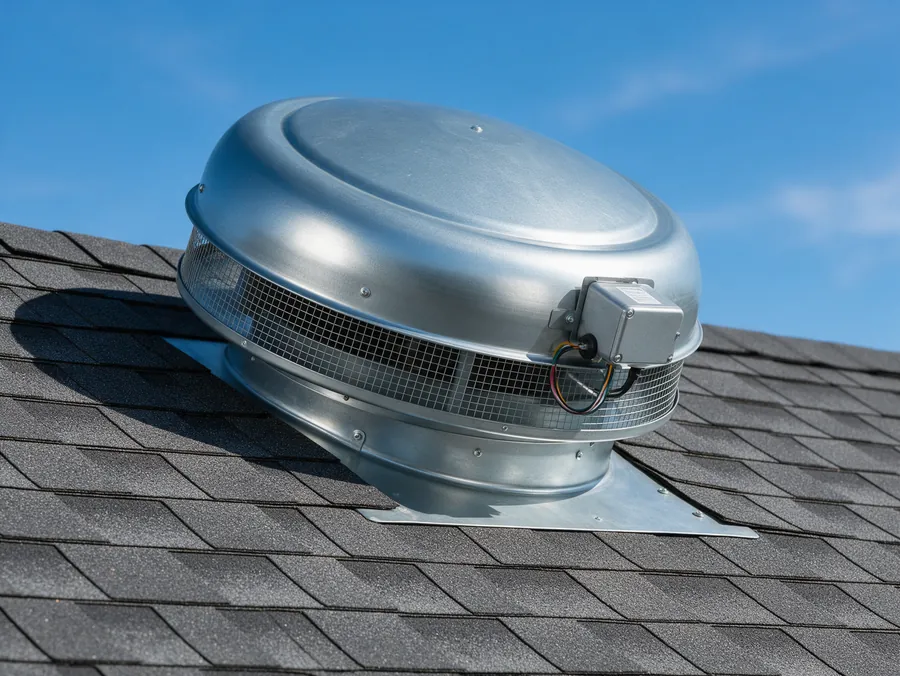
Both pull hot air out of the attic. They differ in what powers them, when they run and what they cost to run.
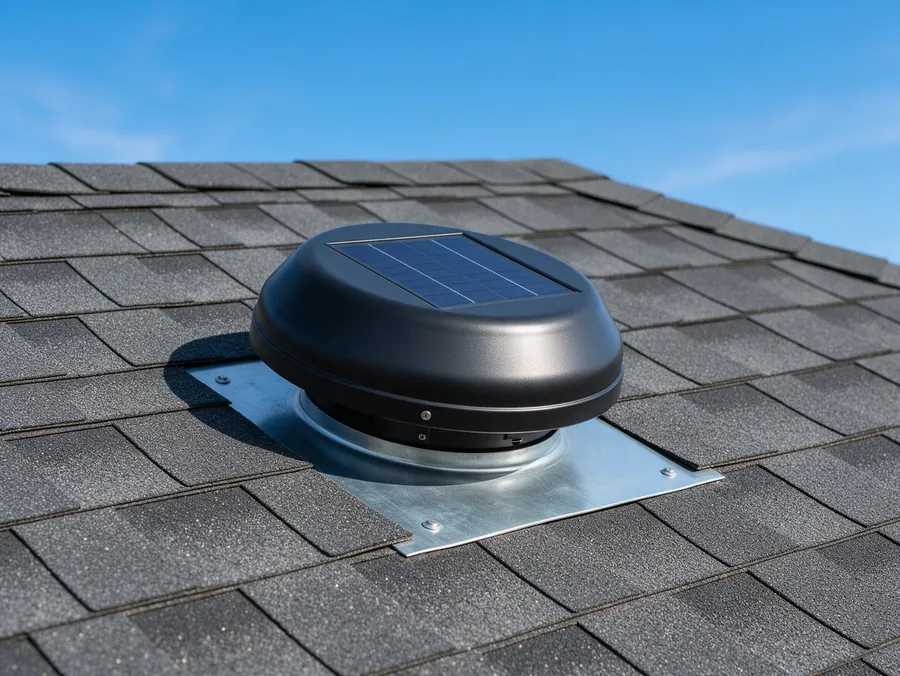
| Electric | Solar | |
|---|---|---|
| Power | Your home’s electricity | A small solar panel on the fan |
| When it runs | When its thermostat says the attic is hot | In daylight, strongest in full sun |
| Cost to run | Adds to your power bill | Nothing on your power bill |
| Noise | Noticeable | Very quiet |
| Cost up front | Lower | Higher |
Either kind can pull cooled air up out of your house through gaps in the ceiling if the attic doesn’t have enough intake vents, and a fan shouldn’t share an attic with a ridge vent. We check your intake vents and your ridge before we recommend a fan, and sometimes the right answer is better vents instead of a fan.
Gold key roofing fixed a leak caused by a previous roofer using plastic roof vents. Great service and price.
… they told me with all honesty that we didn’t need to have work done. To me, that is a sign of exceptional honesty in a business. I have always been very happy with their work and would refer them to anyone.
They were very professional and clean in their installation. … I would definitely use Gold Key for any future roofing needs.
They were thoughtful, polite, professional, and highly competent. Just outstanding work in every respect! … Highly recommend Gold Key Roofing.

for neighbors.
What Comes with Your Attic Upgrade
- 45,000+ Roofs installed
- 4.9 star Google rating from 564 reviews
- 2 local offices, Orlando and Fruitland Park
- 5 Central Florida counties served
One system, one roofer
The roofer who checks your vents also checks your insulation, so the two work together instead of against each other.
Honest recommendations
Sometimes better vents beat a new fan, and sometimes your insulation is fine. We’ll tell you either way.
Sealed into your roof
Vents and fans are cut in and flashed by roofers, so every new opening is sealed like the rest of your roof.
Licensed and insured
Florida Certified Roofing Contractor CCC1329157 and Contractor License CBC60354, with general liability and workers compensation on every job.
Photos before and after
You see what your attic looked like before and what we changed.
Here since 1975
When you call about your roof or your attic years from now, the same company answers.
Attic Insulation Questions, Answered
Don’t see your question? Call the office nearest you: Orlando at 407-851-0680 or Fruitland Park at 352-492-0042.
Central Florida is climate zone 2. ENERGY STAR recommends R49 for an attic with no insulation, or adding R38 on top of three to four inches of what you have. New homes must have at least R38.
It depends on the size of the attic and the depth of insulation you need. You get an exact written price after we check your attic.
Usually, if the old insulation is dry and clean. Wet, moldy or damaged insulation should come out first, and air sealing comes before anything new goes down.
It can be. Studies show a radiant barrier can trim cooling costs in hot, sunny climates, especially with ducts in the attic. It needs an air space to work and loses some of its effect as dust builds up.
They can help. In a Florida Solar Energy Center study of a Central Florida home, two solar fans lowered the peak attic temperature by more than 20 degrees and cut cooling energy by about 6 percent. They only run in daylight, and they need enough intake vents to work.
It can, if the attic doesn’t have enough intake. The fan pulls air from wherever it can, including gaps around ceiling lights and the attic hatch. That’s why we check intake vents and air sealing first.
Yes. A fan needs outside air coming in low. Without it, the fan pulls air from the house or works harder than it should.
No. The federal credits for insulation and solar don’t cover work finished after December 31, 2025. OUC and Duke Energy offer rebates for ceiling insulation upgrades, and Duke’s requires one of its approved contractors, so check with your utility before the work starts.
Yes. From our Orlando and Fruitland Park offices we cover Orange, Seminole, Lake, Sumter and Marion counties, including The Villages, Leesburg and Ocala.
Find Out What Your Roof Actually Needs
Call Gold Key Roofing at 407-851-0680A free roof inspection, photos of what we find, and a written price for anything your attic needs.
Book your free roof inspection
Tell us about your property and we’ll call you to set up your inspection. Fields marked * are required.
"(Required)" indicates required fields